Wednesday, 25 July 2012

Book Review: The Tiger's Wife

“Deftly walks the line between the realistic and the fantastical…In Obreht’s expert hands, the novel’s mythology, while rooted in a foreign world, comes to seem somehow familiar, like the dark fairy tales of our own youth, the kind that spooked us into reading them again and again…[Reveals] oddly comforting truths about death, belief in the impossible, and the art of letting go.” – O: The Oprah Magazine

In a Balkan country mending from years of conflict, Natalia, a young doctor, arrives on a mission of mercy at an orphanage by the sea. By the time she and her lifelong friend Zóra begin to inoculate the children there, she feels age-old superstitions and secrets gathering everywhere around her. Secrets her outwardly cheerful hosts have chosen not to tell her. Secrets involving the strange family digging for something in the surrounding vineyards. Secrets hidden in the landscape itself.
But Natalia is also confronting a private, hurtful mystery of her own: the inexplicable circumstances surrounding her beloved grandfather’s recent death. After telling her grandmother that he was on his way to meet Natalia, he instead set off for a ramshackle settlement none of their family had ever heard of and died there alone. A famed physician, her grandfather must have known that he was too ill to travel. Why he left home becomes a riddle Natalia is compelled to unravel. 
Grief struck and searching for clues to her grandfather’s final state of mind, she turns to the stories he told her when she was a child. On their weekly trips to the zoo he would read to her from a worn copy of Rudyard Kipling’s The Jungle Book, which he carried with him everywhere; later, he told her stories of his own encounters over many years with “the deathless man,” a vagabond who claimed to be immortal and appeared never to age. But the most extraordinary story of all is the one her grandfather never told her, the one Natalia must discover for herself. One winter during the Second World War, his childhood village was snowbound, cut off even from the encroaching German invaders but haunted by another, fierce presence: a tiger who comes ever closer under cover of darkness. “These stories,” Natalia comes to understand, “run like secret rivers through all the other stories” of her grandfather’s life. And it is ultimately within these rich, luminous narratives that she will find the answer she is looking for. (From Tea Obreht)

 Ages: 17+

Rated: I don't even know how to rate this, it is most definately a book that will be enjoyed more by adults than anyone younger than a late teen. Themes and issues deal with life, death, war, grief, mythology and family.

I will start this review with a recognition, this will be the first clearly adult book that I have written a review for. That is not to say that I do not regularly read books that are not YA themed, I most assuredly do, but I usually have to sit and digest books like this for quite a while, let my thoughts and understandings percolate and sift through my head for at least a few weeks. It has taken me over two months to think about this book before I can I was able to talk about this book beyond merely stating how absolutely amazingly beautiful this book was to read.

I read the Tiger's Wife on the heels of finishing up Secret Daughter, and was feeling understandably moody and weird. Secret Daughter is a very good book, but it left me feeling off. I immediately picked up Tiger's Wife, by Tea Obrecht, and was transported into a beautifully exotic world that I had first discovered as a child reading Zlata's Diary, and more recently in The Historian by Elizabeth Kostova (which admittedly, I need to finish). A world that is more than a little broken by war, a little broken by cultural clashing, a little broken by history, but yet a world filled with love, hope, and mystery of a world not completely discovered.

Obreht does a beautiful job of intertwining three main stories together through the Tiger's Wife. The first is the story of Natalia, the young doctor looking for meaning relating to the death of her grandfather, told to us in the stories that he had passed down to her in her youth, and stories that she is trying to piece together into an almost autobiographical recounting of the amazing happenstances that her grandfather lived through, turning his life into a spectacular fable that leaves you breathless with awe and wonder. (Do you see what I mean? I keep on gushing.). The first story that Natalia recounts is the one of Gavran Gailé, the "deathless man" that her grandfather sometimes encountered, who collected the souls of the dead. The second story concerns a tiger that escaped from a zoo in World War II, making its careful way to a small village in the mountains that her Grandfather lived in as a small child. Prejudice, fear, and ignorance shape the dealings of the villagers with the tiger, and the young deaf-mute girl that it seemingly befriends.

All three stories are told in a disjointed manner, jumping from the present to the past as easily as we turn the page. Even the stories themselves, as recounted by Natalia, are not told in a consecutive manner. Sometimes she goes back and tells stories that take place before her grandfather's life fable. I say fable because it is so clearly and awesomely fantastical. Stories that Natalia couldn't possibly know, but that fit snugly into the holes that she is trying to fill in. Her grandfather as a child, enraptured by the Tiger come to life from the pages of the Jungle Book, her grand father as a doctor during yet another, earlier war, meeting a man who attracts calamity and death just as he he continues to fail at attracting his own death, her grandfather as an old man telling her his stories, her grandfather as a dead man who has left the final story unfinished.

The Tiger’s Wife never lets us forget that stories have the ability to transcend all manner of reality, whether it teeters on depression or reaches ecstatic heights. Like any good sorcerer, the spell Obreht casts is strong enough to circumvent flaws, and to invite the reader to hope she’ll continue honing her literary magic with even greater depth and care. (From The National Post).

I hope that is clear that this is a story that I am still thinking about. A story that I am still trying to understand. And ultimately, it is a story that I am talking about. The Tiger's Wife is a beautiful read. I hope it takes you on a beautiful journey.

Grade: A+

Wednesday, 11 July 2012

Book Review: Cinder

“Author Marissa Meyer rocks the fractured fairy tale genre with a sci-fi twist on Cinderella.”

Humans and androids crowd the raucous streets of New Beijing. A deadly plague ravages the population. From space, the ruthless lunar people watch, waiting to make their move. No one knows that Earth’s fate hinges on one girl. . . . 
Cinder, a gifted mechanic, is a cyborg. She’s a second-class citizen with a mysterious past, reviled by her stepmother and blamed for her stepsister’s illness. But when her life becomes intertwined with the handsome Prince Kai’s, she suddenly finds herself at the center of an intergalactic struggle, and a forbidden attraction. Caught between duty and freedom, loyalty and betrayal, she must uncover secrets about her past in order to protect her world’s future (From Goodreads).
Ages: Young Adult (Although reasonably, I would say any girl, and I do mean girl, would be able to read this  by 11-12 years of age. And get it. And like it).

Rated: PG with a teeny tiny touch  of 13, but so negligible to not even see it if you blink. 

Cinder is woefully, and most obviously, a retelling of a well known, much beloved, classic of a fairy-tale, Cinderella. I say woefully, because it seems to me that everyone is talking about how freaking awesome of a rebooted version it is. And honestly? Cinder is like, totally rocking brah. No really, Cinder is great. But it is great without focusing on the preexisting narrative of an orphaned girl being aided by mystical means to marry the prince of her dreams. Er, excuse the rhyme there. 

So what do I want to talk about here? I want to talk about Cinder. I want to talk about society. I want to talk about how refreshing it is to read a book by someone with the last name of 'Meyer' that does not make me want to gouge my eyes out with a rusty spoon. I want to talk about family. And mostly, I want to talk about how awesome Cinder is as a realistic individual reacting to extraordinary events. 

See? Girls can be mechanics too!
Although I seriously doubt ANY mechanic would
wear open toed shoes, let alone HEELS. 
So Cinder is a mechanic. A really fabulous mechanic, considering she is sixteen years old, has seemingly never had a formal education of any kind, but-- she is also a cyborg. In this slightly dystopic future, cyborgs have no legal rights as a human being, as they are not fully human. Regardless of being born 100% human, after an accident that would leave them mutilated and unable to work, the introduction of machinery into their bodies renders them less than human. Problematic? I'd say so. On a not so subtle level, Cinder is about humanity, and how we judge humanity, how we think about who qualifies as human, and how, despite all the information in front of us, we can dismiss individuals as less than human because they do not fit into our constructs of human. *cough cough* slavery *cough cough*. 

In the opening of the novel, we see Cinder sitting in her booth in the market place of New Beijing, fixing things, and trying to avoid attention to the fact that she is a cyborg. Everything is normal. Nothing looks like it  will ever change for better or for worse, until the day that Prince Kai, he of the dreamy dreams of dreaming teens, shows up with a mysteriously nonfunctional 'droid. Is it the classic boy meets girl, boy and girl like each other, but extreme obstacles block their path? You betcha! There is a plague ravaging the country, there is a threat of war from the Lunar Queen Levena, a weird subplot with mind control(?), and of course, the no small issue that Cinder is part cyborg. 38 % in fact. She is such a social reject. Ugh, gross. 

There is of course, a ball. Cinder is, of course, not allowed to go. Because, her step-mother is such a witch (Although as a side note, I felt no small amount of sympathy for Adri, because I felt like her reasons for disliking Cinder were never fully explained, and were probably based around the why's and how's of how Cinder became a cyborg). There is of course an orange chariot, that is magically transformed into a cool ride by, of course, a fairy god mo- No. Cinder is indeed, disallowed attendance at the ball. But there is no 'fairy godmother'. Cinder is remarkably self sufficient, and kick ass. She likes a Prince, and he likes her, but she has all the believable characteristics of a teenage girl in serious like with a someone she considers to be so far out of her league that he's practically in orbit. And of course, she is hung up on her looks in a normal teenage way, only instead of obsessing over how small her boobs looks, she's concerned about her robotic appendages, and anyone noticing them. 
From "Glitches"- a short prequel to Cinder. You can check
it out here.

Moving on.

One of my favorite characters in the book was, perhaps not unsurprisingly, not a human to any degree of imagination. And 'her' name is Iko. Iko is Cinder's android partner and only, who helps her run her mechanic business, and does whatever tasks and chores Linh Adri decrees. She is fun, ridiculous, and quirky. Kind of like the sassy best friend you see in all those tween Disney shows, funny, friendly, but one dimensional. Due to a malfunctioning personality chip, Iko really does embody the characteristics of a human servant, with little self mutterings against her employer/owner, enjoyment of trying on the pretty things that belong to the 'Mistress', and a delightful lusting after the ever handsome Prince Kai. 

I do not want to talk much about the plot. I would totally ruin it for you. But the villains, human, alien, and microscopic, are believable. The hero is fighting to keep his kingdom safe from two of the three. The heroine is fighting all three. Ever the two shall meet? I won't say. I will say that this book is a great read. It was fast paced, the characters where all interesting and multifaceted. It ticked off all my boxes for 'Strong Female Lead'. And best of all, it left me waiting in extreme anticipation for the next book. 

Grade: A- Because I am grumpy. 


Tuesday, 13 December 2011

Manifested Worth of the Book in Transitive Form: Or more simply, wtf eBooks!

I remember as a small child sitting on a couch that practically swallowed me whole, with a book on my lap thinking to myself, as soon as I can figure out how to read letters, I am going to read this book and NOT ask Mummy.  

Yes folks. Mummy. Not 'Mom' or its more horrifying counterpoint 'Mommy,' but simply Mummy. 

But I digress. What I wanted more than anything, more than I wanted to watch Teenage Mutant Ninja Turtles or My Little Pony (I had an eclectic taste even then), I wanted to know how to read. I felt, at such a tender age, that the ability to read granted a worlds worth of wisdom. And I was partially right. As I mentioned in an earlier post, the first book I 'read' on my own was "Where the Wild Things Are". I had all the answers, I knew everything! Books were magic. 


In the last decade, how I read has drastically changed, and this is in no small part due to the rise of the Web 2.0 world, full of electronic gadgets, e-readers, tablets, iPad's. I was dismissive when Amazon first released the Kindle, reasoning that no one would ever want to read something as sacred as a book through an electronic interface. Oh... so my father downloaded the Bible to read on his laptop even though he has a... real one? He's just weird! Online newspapers? Screens are totally not conducive to seeing page content in an effective and attractive manner. And eBook will never catch on. 

Except then I got a kobo. For those of you who are not Canadian, a kobo is the Canadian version of the Kindle, and it is actually legit a better device than its counterpart. It's smaller, has more memory, better battery life, and is more compatible with different types of eBook files or documents. It is a Copyright Pirates wet dream come true. 

I love my kobo. It is small. It fits into my itty bitty ever so fashionable purse. I have the entire Harry Potter series, all the Game of Thrones books, my trashy romance novels a la Kim Harrison, and at least forty Classics. 

Actually, this is my thing. The Classic's.  Books that have been out of copyright and the publishing industry has been making an absolute fortune on because people want a bloody physical copy of Charles Dickens, or Ovid, or Old English Gent who writes boring prose (Not Shakespeare, I lurve him), and people have really had no recourse but to pay for titles that have been marked up 200% because these titles are cash cows. And now, they are all available for free download through store websites, as well as alternative depositories such as the Project Gutenberg site. 

Even better, the majority of libraries these days offer an assortment of ebook titles that they have purchased from their book vendors. There are problems attached to this form of book lending though, with vendors trying to limit the amount of times a digital book can be lent out before the library is forced to renew their purchase on the title. I have issues that libraries are, or will be, forced to repeatedly buy an eBook from a publisher because they have limited the amount of times it can be 'borrowed,' because part of the appeal of digital books is that they do not face the same wear and tear as physical books. In the Children's Department, we often bought the same title 5-8 times a year because it had been stolen, destroyed by a child, or was falling apart because it had circulated so heavily that the glue holding the pages in was exhausted and just gave up. Ebooks have the potential to remain in circulation forever. And in that sense... I understand the publishers wanting to build in required need to renew a contract on title use. But, when you buy a book, a physical book, that book is yours barring destruction of the copy, or you need to make room on your shelf for newer acquirements. 

Which brings me to my next pet peeve about digital books. The cost of them. 

Ebooks require virtually no labour to create copies for purchase and download after it has been translated into digital format. I understand that the publishing industry is for profit, and that books regularly cost a good hunk of change. I do not understand why ebooks are sold at the same, or comparable cost, to their physical counterparts. I do no get it. It drives me mental. A few short years ago, ebooks were sold for 99 cents. Now, if they cost 10% less than a 'real' book, it is considered a good deal. This is, in part, due to having created a demand, the companies are now able to charge more. However, this is driving the dark underside of the digital world, the world of pirating. 

You can find almost every title online for no cost, or, an incredibly cheap subscription price to a website that hosts various titles. It sounds ridiculous to complain about the cost of an ebook, considering that most ebook devices cost at least $100, similar to an ipod or multimedia player. And once bought, you own that digital title at least until you delete it off your device (and sometimes longer because the company you bought it from has it on file that you own it now), so how do they make money off of you?

So now I am torn. I understand that in this digital world, content is money. Information is money. Access is money. And yet, I find myself uttering the trope of the internet is meant to be free! But equally, publishing is a business, a big business, and authors deserve to be rewarded for their creations more-so even than the music industry ever did (they don't actually create anything new, or have original thought, even if they do make music that I rock out to all day long. Chair dancing anyone? Anyone?). 

Now to address my original premise, that reading holds magic. It does, regardless if it is through an electronic device or bound in paper and cardboard. But perhaps what has been lost is the feeling that a book has a manifested monetary worth. Books are straddling two words, and I am not scared that they will cease to be, more that I am interested to see what their next transformative experience will create. 


Monday, 5 December 2011

X-Ring... c'est what?

It's been a very long time folks, and for this, I apologize. New job, new house mates, new activities. Not yet the new year, but I've already resolved to remedy my lack of recent content updates. First things first, I am no longer a Children's Librarian. What?! I know. Big changes in Risque land.

So, while this post is not about books and or literature, it is of a matter rather near and dear to my heart, as well as my right hand.

My X-Ring.

For those of you not in the know, and I realize that this could potentially be a large number of yiz, an X-Ring is a ring that is received by fourth year undergraduate students at the venerable Saint Francis Xavier University. It is, as you would say, kind of a big deal. I'm not going to say that the X-Ring has achieved an iconic status and is possibly (probably) worshipped by the few and proud students who attend STFX, but the reality is, is that to receive the X-Ring is a really big deal. Student's receive it every year on December 3rd, and people start counting down days to X-Ring as early as Frosh week in their first year. It marks a particular level of achievement, success, and participation within a community that really makes your experience at STFX feel like you have a large, slightly obnoxious at times, family. It is also a majorly needed boost for many fourth years to just go and study for those derned exams already so you can turn that ring AROUND. But... that's another thing altogether.

Anywho, why am I even talking about some ring that the majority of this world's population couldn't give two cents about?

Todd Pettigrew wrote a rather, let us call it, dismissive blog post in his MacLeans blog, the Hour Hand, titled simply, "Time for this year's edition of X-idol".

He starts is with the dubious endorsement of,

There’s a lot I like about St. Francis Xavier University. Its pleasant campus, the small town charm of Antigonish, its rich history. But the ridiculous obsession that the university and its alumni have with their university ring…
Whoah. Ridiculous obsession? I will admit that we are possibly slightly obsessed with our rings. But ridiculous? Bah I say!

Pettigrew goes on to note, in a totally geeky way I might add, student's 'tude to counting down the days until they proudly slide that ring onto their finger.

Graduates await the ceremony like kids awaiting Christmas, and like so many Gollums out of Tolkein, they count the days til they can get their hands on the precious, the precious. 

One Ring to Rule them all. 


Why yes, yes we do. Students will put up a daily countdown in their windows proudly displaying that they have Six Hundred and Twelve days until X-Ring, Ninety-Five days till X-Ring, FOUR freaking days until X-Ring man! You get cards in your mailbox from your neighbours congratulating you on your approaching X-Ring date once you hit the single digits.

Todd goes on to further belittle a ring, that might I add, he does not have, as he is a proud faculty member of UNB and did not attend STFX as a student. Ever.

Don’t get me wrong. I like the school, and I’m sure lots of fine people go there, have gone there, and are there right now. But the whole ring thing is,in my view, downright unseemly.
Let’s leave aside the fact that the ring itself, stamped simply with a big black X like a branded steer or a carton of dirty magazines, is just plain ugly (though I freely admit that my own university’s ring is uglier). And let’s also overlook the aura of self-congratulatory creepiness by which the university promotes the ring ceremony like it’s the initiation rite of a secret cult: the ring, they say, is “the unmistakable emblem that links you to fellow Xaverians around the world for the rest of your life.”
Actually, it does. I have met an incredibly random segment of the population in terms of race, gender and age with whom I would probably never strike up a conversation with in normal circumstances because they have this ring on their hands. Many STFX graduates are able to make job connections through strong alumni ties, which is fostered in part by the shared recognition of their rings.

Let me give you an example which occurred during my brief time as a Children's Librarian. A family wandered into the library and asked to use the computers. While we were setting them up, I noticed that all four adults had a certain ring on their hands. No sillies, it was not the wedding bands that caught my eye, it was the X-Ring! This family had driven all they way down from Nova Scotia to visit family, and after all admiring our pretty pretty rings, we talked shop and I sent them on their merry way confident that they would have a great time visiting some local attractions. They will be getting a Christmas card from me this year. This is one of many such sighting, and is no less significant than the bar tender who went to Dal, or the hopelessly turned around businessman who could not find the financial district. All served as a reminder of community.

To be frank, I am uncertain how the community that comes together over a symbolic form of togetherness is any different from the communities fostered at any other university through the sales of university gear, sports events, and Home Coming. I have a sister that is rabid about the University of South Carolina's football team. She has all the gear, clothing that is red and black, and can doubtlessly perform several Gamecock cheers at a moments notice.

Perhaps my confusion over this article is based on the simple fact that I am no stranger to the significance of school solidarity which American's are much better at generating than Canadians. Every kid in my high school, or at least it seemed to me at the time, got very expensive class rings complete with diamonds, little logo's commemorating their involvement in teams and groups, alongside letter jackets, hoodies, and keychains. I didn't understand why it was so important to teenagers to commemorate where they attended the "best years of their lives," however after attending University during my formative years, I understand now retroactively.

Saint Francis Xavier was and is a fabulous university that gave me so many wonderful experiences, fabulous friendships, and provides me with ongoing alumni involvement. I have since completed a Masters at another wonderful institution, which I also feel a connection too. But every time I look down, and see that glint of gold, and the bold black shininess of the onyx X, I am reminded of a wonderful four years, and a community that I will always be a part of.

So Todd, I ask you this: how can you belittle an experience that is so wonderful for so many people? You don't have to understand why or how us X-graduates feel this way, but you should celebrate our successes, just as we do.

PS: Congrad's all you X-ers that received your ring this past weekend! We're all so proud of you.

Thursday, 8 September 2011

Libraries Lead to Plague Victims

From InspiredbyLit

Twilight vs. Hunger Games

I love the Ginger Haze  art blog by Noelle. I also adore the Hunger Games trilogy by Suzanne Collins because it is smart, sexy, and Katniss kicks everyone's ass. I have a weakness/problem for strong female characters.

As Noelle points out, the entire concept for the Hunger Games is thus:
"How can I be the exact opposite of Stephanie Meyers?”
Anywho, just read the Hunger Games, and check out Noelle's art.

Stranger Than Fiction


As far as I'm concerned, this is completely true. Love is not fiction, but sometimes it can be found in the fiction section. Is this the appropriate place to mention that librarians do it in the stacks? So I've heard at least. Erm... going now.

Wednesday, 7 September 2011

Book Slam: Breaking Dawn by Stephanie Meyers

Premise: To be irrevocably in love with a vampire is both fantasy and nightmare woven into a dangerously heightened reality for Bella Swan. Pulled in one direction by her intense passion for Edward Cullen, and in another by her profound connection to werewolf Jacob Black, a tumultuous year of temptation, loss, and strife have led her to the ultimate turning point. Her imminent choice to either join the dark but seductive world of immortals or to pursue a fully human life has become the thread from which the fates of two tribes hangs. Now that Bella has made her decision, a startling chain of unprecedented events is about to unfold with potentially devastating, and unfathomable, consequences. Just when the frayed strands of Bella''s life - first discovered in Twilight, then scattered and torn in New Moon and Eclipse - seem ready to heal and knit together, could they be destroyed . . . forever? (From Indigo).

Ages: 12 and UP. Please read that again. 12. And up.
Rated: PG-17 for graphic content, 'sexuality', coarse language, and extreme idiocy.

General description of the book, shamelessly lifted from Urban Dictionary, because I aint wasting my time with this shit. So, here is a sweet and simple synopsis of the book. 
Bella, the human, and Edward, the vampire, get married. Then they have rough sex that leaves her bruised and battered. (Also, he bites a pillow and covers her with feathers.) Then she gets totally pregnant with some kind of demon death baby who grows at a superhuman rate, can read thoughts in the womb, drinks blood in utero, and breaks Bella's ribs, pelvis, and spine from the inside. Some werewolf stuff happens and Jacob (20 year old werewolf) falls in love with the tiny demon death baby which sparked many confused and slightly disturbed comments and thoughts in readers around the country. The baby is delivered via Cesarean section, which is a polite way of saying that other characters rip Bella's stomach open with their teeth. ("Seriously, they cannot make this into a movie. I cannot imagine for one second how they could make this into a movie appropriate for teenage girls and keep this part in it.") 
Let us start with this sentiment, posted by a reader who shall remain anonymous because I just think that they are an embaressment to humanity:
Let me start by saying that nothing for me will ever be as good as Twilight. It was an unexpected find and I never anticipated that Breaking Dawn would match that.
OMG GUYS! Twilight was such an amazing book! I love Bella! I can relate to her because she is just like me!

I cannot even... no. Just. No. I refuse to even give you a synopsis of my own doing. Because that means I would have to talk about the lack of plot, the lack of any worthwhile character, the author's infatuation with 'whiteness' and 'sparkles' which might make me sound like I actually liked the book. Which I do not. I read it under extreme duress about two and a half years ago because my baby sister is a scary human being, who watched me like a hawk and made me go back and read the multitude of pages I tried to skip every time I hit a 'sparkle' heavy paragraph. Unfortunately, that was almost every other paragraph. 

I hold the Twilight series as single-handedly causing the destruction of modern society. 

I am going to take this time to talk about the heroine of this... romance, Bella. Bella Swan. Bella is resoundingly dim-witted, dull, and a horrible role model for young girls and teens. At one point in the series, Edward leaves her, apparently for her own good. You know, because he is a vampire, wants to eat her, and would break her in half with a quirk of his sparkly white pinky finger. So what does this bitch do? Well, she tries to kill herself. She also spends several seasons sitting in a chair in her room being a shut in watching the world go by. At least, that is my understanding from the movie. Don't ask. I don't want to talk about it. 

However, in Breaking Dawn Bella is even more dangerous because her character essentially informs girls that in order to be a complete woman you need to meet three criteria: get married, have a baby, and be a loving wife and mother. Hear that feminists? In order to be a real woman, you need to get married to a man, get knocked up, and care for said man and spawn for the rest of your life. 

Furthermore, exactly how old was Bella when she did all this? Seventeen? Because she did not want to be older than her husband when she was 'turned' into a fellow sparkling blood thirsty vampire that fortunately was totally able to control her blood lust when no other fledgling vampire is able to exert any form of control. Guess what girls! Getting married at the ripe old age of seventeen to a significantly older man is totally sexy. How could this possibly go wrong!?

Ah. Right. That. Let's not talk about that...
So, age inappropriateness aside, what else is wrong with Bella's resoundingly horrible life decisions? Well, she had sex. With her loving husband Edward, who left her covered in bruises, and unconscious. Guess what ladies! It turns out we are doing this shit completely wrong! Begone soft touches and romantical nonsense whispered in your ear. Begone controlled safe environments and partners that are aware of what they are doing to you. What we need is a sparkly white man to be so resoundingly violent in the bedroom that we are completely physically broken. Also, for heavens sake leave birth control out of the situation. I mean, when he promises to pull out that is a 100% fail proof plan against unwanted pregnancies. He will probably also promise that he is sterile. Risk free amirite?


So problems established thus far: 
  1. Bella needs a man to be fulfilled as a woman. 
  2. Bella needs a child to be a complete woman. 
  3. Bella is in a physically abusive marriage. 
  4. Bella does not know how to practice safe sex (see above). 
  5. Bella does not know about contraception. 
Most problematical (problematic? I do not even know. Breaking Dawn is stealing my ability to create coherent sentences now!) is how Bella is treated by her male counterparts, as well as herself, as some sort of commodity. Edward wants her. So does Jacob Black. They are constantly throwing her back and forth between themselves and despite Bella being all, "But I will always love Edward," it appears that prior to her marriage that she would have settled for Jacob and proceeded to pop out werewolf babies and be boringly sullen and brooding over her lost first love. But it's cool girls. Once you are off the market and your #2 main man is still looking for a mate, make sure he sees your offspring. She's just like you! Only newer and younger! A whole fresh new model just like you, but not you, because that would mean you were committing either polygamy or adultery. Both of which are normal occupational hazards of the extreme Mormon sects. Oh wait... 

Look. This book? Not really appropriate for any girl, woman, or grandmother. Terrible, horrible, and shameful writing aside, there is nothing that BD offers girls in the way of how to have safe and practical relationships that wont get them killed by some pervert wearing fake fangs and body glitter. Better life choices would include P.C. Cast, True Blood, and My Babysitter is a Vampire. 

I now need to go bleach my brain of all those remaining memories I have of the Twilight series. 

Grade: Fail^infinty

Tuesday, 6 September 2011

People Are Horrible Lazy Slobs

I'm going to start this post with a simple sentiment: people are gross. 

That is not to say that people, individuals, whatever, do not have regular cleansing schedule and know how to keep themselves germ free and healthy. What I completely do not understand is the general inability of the public to do such simple task of not leaving their shit all over the place. 

Confession. 

I can sometimes be one of those people. Inconsiderate of me, I know, but when I am on that subway, and I have finished with my Timmies Iced Cappachino, I will probably be leaving behind my cup. What? It does not fit into my purse! And it is so inconvenient to have to find something as ubiquitous as a garbage can once I have gotten off the subway. So I leave it behind. Besides, it is not like someone is going to call me one it. And what are the chances that I will be getting on the same subway car on any single given day? Slim too none. Out of sight, out of mind, no longer my problem. Don't you dare lie, I know you do it too. Fess up. 

Possibly not the garbage I am talking about.
But this is exactly where the problem starts. We are not responsible for having to tidy up after ourselves in public spaces. We have garbage pickers to pick up the trash we just cannot seem to manage to get into a garbage can, sidewalk sweepers to catch all those pesky cigarette butts stubbed out on the street, we are no longer even responsible for returning our shopping carts, we leave them for 16 year old's to wrangle and return. The idea of making the effort to do any small measure of keeping our spaces clean... we just bitch and moan about the sheer effort and indignity involved in such a monumental task, and then contract the work out to day laborers and underprivileged youth. And then, we pat ourselves on the back for creating minimum wage part-time jobs and walk away, probably leaving behind empty McDonald's wrappers and yet another smoldering ciggarette butt. 

Aight. So. Library tie in time. 

Theoretically, the library should be a clean place. You know, books are sacred, keep food and drink away from the books (and in this day and age, the computer too please, kthnxbi), treat the books with respect. Dammit  swaddle those motherfucking books like you would an infant.

Now, I understand that putting books back on the shelves is a daunting prospect. Actually, please do not even remotely even think about re-shelving anything, any. thing. We will hunt you down and shoot you for the good of humanity. Or the librarian equivalent of death of being drawn and quartered. But don't worry! To ensure that you do not commit such a heinous act and meet such a dreadfully painful end, we have a helpful cart for all the reject books that you thought you wanted, but actually don't. No worries, books do not have feelings! Or do they? 

Unfortunately, the cart is often left empty. Because it is in a clearly inappropriate, unavailable, and unreachable area of the library. Instead, books are left:

  1. on the floor
  2. stacked on chairs
  3. hidden in the play castle
  4. hidden inside our weird circle thingies that might be chairs or might be play equipment? 
  5. under benches (still on the floor, but now hard to see and/or retrieve)
  6. in the garbage
  7. behind shelves
Of course, we also get the smuggled in discarded food wrappers, empty disposable water bottles, chewing gum ever so nicely left re-wrapped in their paper-or sometimes just stuck under tables, apple cores, forks, spoon and other assorted cutlery. Because clearly, the library, full of books that are actually exponentially easier to use when their pages are not crusted together with the juice from that nice hamburger you stealthily ate in the corner, is the place to eat your three course turkey dinner. 

Come on people!

The library is not your home! I mean, we are a nice place, occasionally quiet, and possibly actually cleaner than your own place that you pay for and possibly even maintain. It actually boggles my mind at the sheer amount of disregard that people show towards keeping the library space and contents clean. If I had it my way, which I do not (mores the pity), we would have little magical statues that would start yelling at you if you tried to re-shelve a book, hide a book so as to prevent the shame of placing an unwanted volume on our 'rejected and to be reshelved' book cart, attempt to eat anything and/or leave behind the remnants of a meal, or drop any form of garbage in the library space. And then kill you. If there were no witnesses. Or easily impressionable youth. Remember children: killing is wrong unless you are on a battlefield, and the library is a battlefield. And so is love, apparently. But I digress. 

I would of course be more reasonable towards the smallest of the small children, as they can't even get to the bathroom on their own, which is why we provide them with their own waste receptiveness conveniently attached to their nether-yay-yas. But once they hit the ripe old age of five, there should be some sort of fostered knowledge that garbage cans are where you throw out, well, garbage, and that you do not leave your toys all over the floor for one of your adult slaves to pick up after you. 

Actually, the sad truth is that it is the children who solemnly come up with their books to put on the cart, or with a fistful of garbage to be disposed of. The real culprits are the adults. Because man, they have their own adobes to keep clean, and this other secondary space? Not important. 

Buck adults, we are watching you, and waiting. You don't want to leave poor Polly to fend for herself now, do you? 

Saturday, 3 September 2011

Uncomfortable Conversations With Children

Every once in a while I get an absolutely amazing question. The kind of question that reinstates my faith in humanity, that not everyone is an absolute idiot more concerned with their Call of Duty team and celebrity gossip. And then sometimes, I get questions like this:

"Can you help me find a book on mastroliberation?"

Bless small children. Seriously. Mastroliberation. Ha! That's not even a real thing! Maybe this kid means, 'Oh hey, I'm just looking for a book on how cultural revolutions work,' or 'I want to know how I can make music to change the world.' It's adorable! Mastroliber-ah. You are actually asking me for a book on masturbation. And you are... not nearly old enough to need to know anything about that... thing. That nobody does until they are much, much older. Like, retired old. Maybe you should ask your parents, or family member. Hell, ask anyone but me. Fuck! Masturbation!?

But here, a book on the human body. Have at it.

So this is actually what happened. I give the child a book on the human body and wish them luck in their quest for information. So the kid goes to sit down, and the mum is there, and she asks why he's reading a book on the human body instead of his usual fare. The kid solemnly informs her that he heard her talking about mastroliberation with his older brother and he was trying to find out what it was because he was worried that his older brother was really sick. So he asked the librarian for help and she had given him this book on the human body.

The mother, at this point comes over to me, and I am trying so hard not to laugh. Children! Holy Hosaphine Harriet, and Hubert. From the mouths of babes and all that tripe. Fortunately. Luckily? The mother was just as amused as I was about the situation, and asked if I could find any books on puberty. She also thanked me for giving him a book on the human body that was at a level her precocious kid could read and understand.

All in all, it was a good exchange.

I find it disturbing at the number of parents who actively work to shelter their children from any knowledge of the human body and how it changes and develops over the course of life from child, to teenager, and finally to adult. Puberty is probably the most terrifying change anyone ever goes through. I remember some friends of mine, way back when, that were completely terrified that they were dying the first time they got their periods. Completely rational fear by the way. If you have no idea why all of a sudden you are bleeding so much blood  and no one has ever told you that this is a perfectly normal phenomenon, and that it happens to all girls, you are going to lose your shit.

And although some parents make sure their children are reading books with safe themes, and safe characters, engage in safe activities (yawn), it is their right as a parent to decide what to expose their children too, to keep them safe, to keep them happy, for their own sanity.

I thought this mum was super freaking cool, for calmly accepting that her child had overheard something that he did not understand, and that he needed some sort of explanation to alleviate his fears that his big brother was going to freaking die, rather than it being an activity that is, from my understanding, a very regular thing for male teens. Again, hormones on the rampage. It's totally normal!


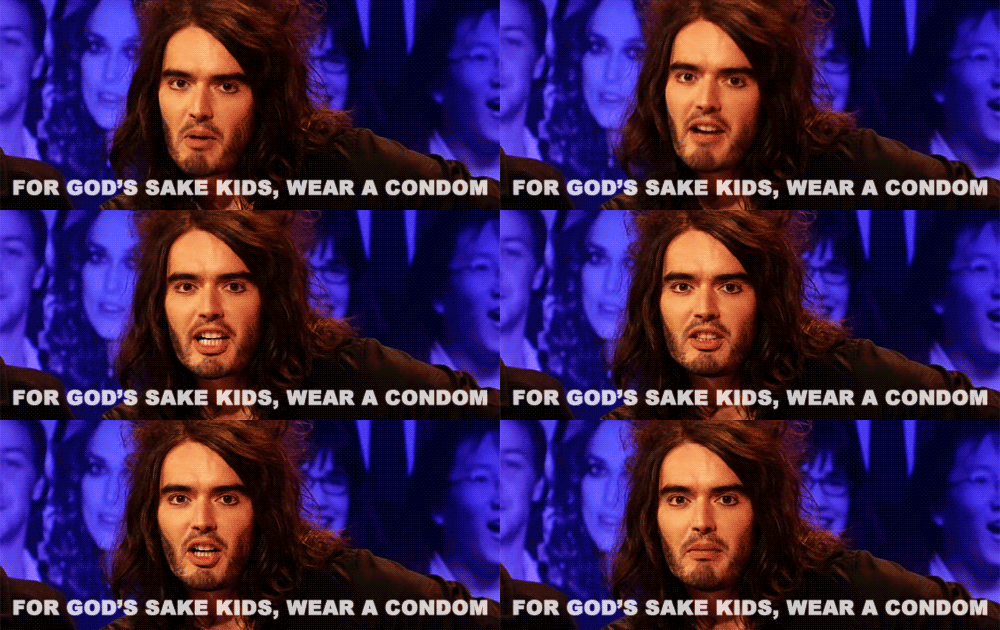
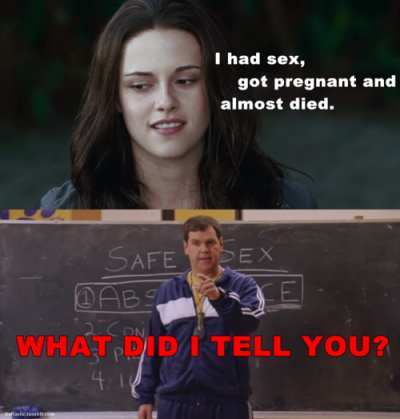
But it is also interesting the types of books that we have in the library discussing puberty, and sex, and growing up. We had a couple books in our catalogue that were from the early 90's that were the most ugly, useless wastes of paper that I have ever seen. Not really informative, and primarily full of the sort of nonsense made popular by Mean Girls: if you have sex, you'll get pregnant and DIE.


The newer books were more informative, though I will say this on them: they still fall under the category of: 'abstinence is best, wait for marriage to have sex'. You know, the standard left over perversions of a strong Protestant heritage. The same thinking that encourages adults to not talk about important information regarding their children's bodies and puberty and sex and all that other uncomfortable stuff that no one ever feels comfortable talking about, and kids will avoid talking to their parents about at any cost. The sex talk with my mother put me off carrots for months.

But I digress.

I espouse a parenting style that allows children to ask their parents anything that crosses their minds, rather than enforcing a policy that discourages questions. Also, this kid asked a librarian for help. That made my day. We are the holder and keepers of information goddammit! So, teach your spawn to recognize our power. Because we are cool, and we know stuff.


Wednesday, 31 August 2011

Book Review: Beauty Queens


From bestselling, Printz Award-winning author Libba Bray, the hilarious (and sometimes twisted) story of a plane crash, beauty contestants, and desert island survival.

The Premise: Teen beauty queens. A desert island. Mysteries and dangers. No access to e-mail. And the spirit of fierce, feral competition that lives underground in girls, a savage brutality that can only be revealed by a journey into the heart of non-exfoliated darkness. Oh, the horror, the horror! Only funnier. With evening gowns. And a body count. (From Amazon).
Ages: Teen
Rated: PG-13 for violence, sexuality, and other lovely vices we are told not to enjoy but actually really do. 

Beauty Queens is a hysterical laugh so hard that you are crying romp of a tale that is simultaneously an examination of femininity and feminism, sex and sexuality, and the cult of consumerism. 

Beauty Queens begins with a word from the Miss Teen Dream pageant, The Corporation, warning that some of the content of this book is subversive and must not be taken seriously. No really, they are just looking out for us and would prefer really if we just put the book down and continue on our quests to be beautiful and vapid. I mean pretty.

In this Lord of the Flies meets Miss Congeniality-esque masterpiece, an airplane carrying 50 contestants in the Miss Teen Dream pageant crashes on a deserted island killing the camera crew, the chaperons, and a good chunk of the contestants themselves. The survivors are left to survive as only beauty queens can, with grace and poise. Alright, it is hard to survive with grace and poise when your hormones are running rampant, there are sexy pirates in the vicinity, and you've run out of Lady Stache' Off that rids you of your unwanted facial hair, or any body hair, as well as conveniently cleaning up your skin. Handily, it can also be turned into a bomb. 

The layout of the book is structured to resemble a reality TV special, complete with commercial breaks, words from our sponsor, and product placement footnotes. There are info fact sheets about each girl that provides them a chance to tell the audience who they are, which provides constant humor as well as insight into the crumbling pageant facade each girl wears like armor. The evil villains are always portrayed in the classic villain sense complete with location and 0100 hour time references.

I love this book. I love love love this freaking book. Can you tell? I said love three times. It was a clue.

But seriously, this book is fabulous, subversive, and makes you think about social mores, political happenings, and why on Earth you watch Jersey Shore. Example? The crew of Captains Bodacious IV discuss the perils of being reality telly stars, and what follows is... well the truth of marketing, fame, and longevity of reality stars.
“Marketing says pirates are over — it’s all about hot trolls now. They’ve got a hot troll show lined up and ready to go in our time slot: Trollin’ on Delaware Beach. Ridiculous! Like, who is going to watch a bunch of trolls getting drunk at clubs and trying to entice college girls to their place under the bridge? I heard goats mentioned, too, and that’s just wrong” (Excerpt).
Oh wait, did I say challenges social mores? I am such a total bore, going on and on and on and on about how our culture needs to treat its girls better, have less qualifications and restrictions on what it takes to be happy, be reasonable. Look. I understand I have a problem, but I like my problem. So! This book challenges social mores while using pre-packaged stereotypes that unravel faster than my shoddy knitting. We've got Alpha girl Miss Texas, Taylor Krystal Rene Hawkins who is the ultimate contestant, Petra with a deep dark secret, Adina the journalist working on her expose of pageants, to Jennifer who loves comics and super heroes. The girls have secrets, are diverse in ethnicity and sexual orientation, and are not just some pretty face to be fobbed off the moment a hot boy shows up. As I said, sexy pirates. Hard to resist.

Beauty Queen delves in issues of race, class and sexism, and it hold back no punches. For example, the oft used tool of relegating women of color to sassy sidekick roles on tv is called out, the book continually reminds readers of how much time, effort, product and money girls have to put into their appearances while boys just have to put on clean clothes and they are good to go (For a couple of interesting articles on this, check out Jezebels 'The College Fashion Gender Gap' and 'Women Judged For Looking Older, Judged For Using Botox'.)

Of course, no story is complete without a shadowy and malignant presence. The sponsor, known only as The Corporation fills that niche perfectly. The Corporation owns not only the Teen Dream pageant, but also a number of beauty products and fashion lines, they produce movies and TV shows aimed at the young, the beautiful, and the mindless masses. I love The Corporation. It is my new favorite comedic bad guy. Throughout Beauty Queens, The Corporation is continually written into novel with footnotes, advertising, ™ and © references which gives some idea of the real-world pressures these teen dreamers cope with, while also perpetuating the mock media machine. It is a continually hilarious satire about our fascination with being beautiful, having the latest and looking the coolest. 
This is Libba Bray flaying consumerism with witty subterfuge – she makes a mockery of teen sensations and latest crazes, by holding up a fun-house mirror of truth for readers to stare into, horrified and cackling (ALPHA Reader).
I just, I love this book guys. It is smart, sassy, and redefines and recreates what it is to be a girl in this day and age. Girls kick ass. Watch yourselves guys, we are much more dangerous than you would ever imagine.

Grade: A+++++++++++++"

"This is Libba Bray, a writer much more interested in subverting that paradigm—girl-on-girl psychological violence as spectator sport—than playing into it…Beauty Queens is a madcap surrealist satire of the world in which her readers have come of age—reality TV, corporate sponsorship, product placement, beauty obsession—but ultimately, it's a story of empowering self-discovery."  –New York Times Book Review

Tuesday, 30 August 2011

How to scare your patrons shitless: Batman Edition

Pretty sure if I did this, the kids would sit quietly and take up crocheting. 

Maggie Goes on a Diet: A Follow Up

A friend brought to my attention the continuing drama that is surrounding the most inappropriate book written for girls ever, 'Maggie Goes on a Diet'.

The Guardian  posted a story on the debate the book has stirred up, noting that 'Maggie Goes on a Diet' has been branded as irresponsible by nutrition experts. It's not just on the internet anymore people! People are discussing this book IN REAL LIFE. I for one, am pleased by the controversy that the book has stirred among the public. And the book is not even available yet, with the publication date slated for October. 

In a comment in the article,  pediatric dietitian Paul Sacher, co-founder of Mend, which is an organisation that provides free, healthy lifestyle programes for families, said the book was ‘shocking.’

‘The suggestion that a young child should aspire to look thin rather than be healthier or have more energy is very concerning.While it’s important that children maintain a healthy weight for their age and height, the idea that a child should go on a diet and lose weight is not helpful and could potentially be damaging.’
What I found most startling was said by Joanna Ikeda, a nutritionist at the University of California: 

‘Body dissatisfaction is a major risk for eating disorders in children all the way up through adulthood. Six and seven-year-olds already believe that their size tells the world what sort of person they are, and that big equals fat equals unpopular.'

First off, what does it say about our culture that is inundating small children that to be happy and successful you have to fit into a microscopically small niche of thin attractiveness? Why is this, as a culture, something that we both subscribe too and maintain as a cultural norm? At what point, while we sit on our fat assess watching Toddlers & Tiaras do we think that this is okay? That we should be treating our children like objects, objectifying small human beings that have yet to create their own views and understanding of inherent self worth and value? 

This book is a problem, it is a huge problem. But it is also reflective of a self-fulfilling prophecy of the continuation of beauty standards in the Western world's consciousness. 

Fat babies? Cute. Fat children? Unacceptable. Let's tan them and bleach them and turn them into Kardashian automatons already, and leave this discussion behind. 

Monday, 29 August 2011

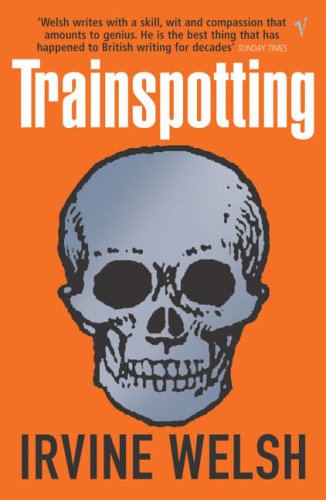
Quote of the Day: Trainspotting by Irvine Welsh

"Choose life. Choose a job. Choose a career. Choose a family. Choose a fucking big television, choose washing machines, cars, compact disc players and electrical tin openers. Choose good health, low cholesterol, and dental insurance. Choose fixed interest mortgage repayments. Choose a starter home. Choose your friends. Choose leisurewear and matching luggage. Choose a three-piece suit on hire purchase in a range of fucking fabrics. Choose DIY and wondering who the fuck you are on Sunday night. Choose sitting on that couch watching mind-numbing, spirit-crushing game shows, stuffing fucking junk food into your mouth. Choose rotting away at the end of it all, pissing your last in a miserable home, nothing more than an embarrassment to the selfish, fucked up brats you spawned to replace yourselves. Choose your future. Choose life . . . But why would I want to do a thing like that? I chose not to choose life. I chose somethin' else. And the reasons? There are no reasons. Who needs reasons when you've got heroin?"

Thursday, 25 August 2011

Book Review: Seven Sorcerers by Caro King

Nin had never liked Wednesdays, but this one took the cake. On this Wednesday she woke up to find that it was pouring rain and that her little brother had ceased to exist.
The first thing to hit her was the rain. As she had forgotten to close her window the night before, the heavy drops bouncing off the windowsill got her right in the face. It wasn't the nicest way to wake up.
With a yell, Nin sat up and glared at the window. Then she scrambled onto her knees and leaned over to struggle with the drenched curtain and the stiff catch. It took ages to slam the window shut, with the storm on the outside where it was supposed to be.
She rubbed her wet face with the sleeve of her pajama top and then peered out of the window at the mass of gray clouds, or at least what she could see of them through the water pouring down the windowpane.
"Great!" she muttered. "Just brilliant. It's got to be Wednesday!"
Seven Sorcerers by Caro King
Ages: 10+

So begins the 'Seven Sorcers' by Caro King.

The premise is thus: Boogeymen kidnap children, and in the process, they make everyone who ever knew them forget, effectively erasing the missing children from existence. Ninevah 'Nin' Redstone wakes up on that particular horrible Wednesday with the realization that she is the only person to remember Toby, which can mean only one thing: that whoever took her brother is going to make her disappear too.

Enter Skerridge, Bogeyman extraordinaire, who steals kids for the mysterious Mr. Strood. Skerridge is the best of the best, and has never lost a child he's stolen. He's taken Toby, and now he's back for Nin. Except the unthinkable happens, Nin escapes into the Drift, and now Skerridge has to get her back.

On the run for her life, with her new friend Jonas and an unusually thoughtful Mudman, Nin is on a quest to save her brother from Mr. Strood, but on the way she has to evade the fabulous and sometimes dreadful inhabitants from the magical world known simply as 'the Drift'.

It is terribly difficult to summarize how absolutely amazing this book is in a concise and non-rambly manner. I tried yesterday, and failed miserably. You can consider this my second attempt.

What I really liked about this book is, well, everything. The writing is witty, refreshingly honest, and clever; the plot is complex with twists and turns that leave you in suspense every time you put the book down; and the characters are fascinating and so well fleshed out you feel like you know them. My favorite is Skerridge, and not just because he sounds Cockney.

I think what drew me in the most was how King created the backdrop to the tale through the creation of the Drift. The Drift is dying along with all the magical and non magical creatures that exist within it. The most powerful have changed themselves into new forms in attempt to beat death, existing through memory and strong emotions. What is really cool is the concept of fear, because people remember fear and react strongly too it. Fear of death, fear of forgetting, using fear to power existence.

Everything is somehow connected, from the Seven Sorcerers that lend their name to the books title, to the terrifying creatures that roam the woods of the Drift. Even Nin herself somehow fits into this world both through her actions and goals, as well as through circumstances beyond her control. Nin herself is a fantastic role model for young children in how she's dedicated to her family and friends, and despite whatever obstacle that is thrown in her path, she always manages to come through it without losing her indomitable spirit.

It is slightly dangerous, totally invigorating, and has drawn me into a world in a way that few children's authors manage. I want more, and I want it fast. Luckily, book two is slated to be published very, very soon. Oh, didn't I mention? It's the first book in a series. Even better. 


Grade: A++++

Tuesday, 23 August 2011

Fun Title to Check Out: Casanova Was a Librarian

"They’ve been killed by angry mobs, knighted, and even canonized.  Some have gained fame or infamy as politicians, inventors, revolutionaries, notorious lovers and even  saints.  In ancient Rome they were literally slaves.  They can be found in every community.  And we either love them or hate them.  There’s no other explanation for them, except to say, they’re librarians!

Casanova Was a Librarian provides a peek at the lighthearted, humorous, sexy and intriguing side of librarians.  In addition to information about famous librarians, you’ll learn about librarians in politics, porn, poetry, song, movies, and the comics.  Librarian humor, librarian recreation and health, librarian underwear, outerwear and other merchandise designed just for librarians are just a sample of the information you’ll find in this book."

(Synopsis taken from GoodReads). 

Children's Librarians are Better Than Yours

I honestly do not know why people have this assumption that librarians are scary relics. Actually no, I do understand. One of my earliest memories is, coincidentally, in a library, and I remember the librarian was absolutely Stone Age. We called her Ms. Merriam*, and she ruled the library with an iron fist. A fist of steel. She watched everyone pass through the hallowed doors of her library with that piercing narrowed eyed gaze that just promised retribution if a page was bent, a cover smudged, or, heaven help you, you spoke. 

*Her name was not Ms. Merriam. 

As a child, she was terrifying. Forget the evil villains on television, Ms. Merriam was it. 

She was the boss, and everyone knew it. 

To be fair, Ms. Merriam was not what would be considered a Children's Librarian now. I am not entirely sure she was one either. Most likely, she was a reference or Adult Services librarian, not trained or otherwise inclined to deal with small hellions running around the library building forts out of the books, or hiding under tables playing games in a manner reminiscent of trolls under bridges. 

Libraries and Librarians then, as opposed to now, were not necessarily geared towards young readers. 

My Aunt has informed me that in her day, aka ancient history, children were allowed into the library on Tuesdays and Thursday between the hours of 4-7, and Saturday from 10-Noon. There was no designated Children's Section or staff. What was that? A whole department geared specifically towards kids? And you offer programs and reading times for them? Well, there was nothing like that when I was young, let me tell you. 

So what we are left with is an understandably nervous population of adults who maintain a certain degree of wariness towards librarians, you know, those fire breathing ladies (and men) of their youth. Their children know better of course, because they have us. The friendly  librarians that smile and help them find books and understand the library. The librarians that give them puzzles to play with and will high-five them on the completion of a really really long book. 

It should come as no surprise that we get a lot of adults asking us to help them. Us, the Children's Librarians. Because we are nice. And not scary. And wear bright colors. Not like, you know, those Adult librarians. They are scary. And probably mean. And they absolutely do not coo over their patrons. 

Well for one, it is totally cool to coo over an infant or an adorable toddler. It is not really the same to coo and coddle a grown man or a grandmother. I will bet you money that if I cooed over some guy who came up to me and asked me to help him find a book that he would probably think I was mentally challenged, really scarily weird, or sexually harassing him. But clearly, Children's librarians, totally friendly, because we coo and shit. 

Adult librarians must be the final hold out on the frontier to have super savvy and in-touch with the population librarians. They need to be eradicated! Alright alright. Not eradicated, but possibly reprogrammed, kind of like how those kids that were saved from cults get reprogrammed. We will make them friendly and helpful, and knowledgeable and totally not like those evil scary librarians that they use to be before. 

I would not call this extremism, just common sense. Amirite?

So Children's librarians. Let me think. We are friendly, mostly. We can stop a kid with the glare of icy death at ten paces if need be, but really we are just super cool and very fun. What else. Oh! We are younger, ergo, friendlier. Except that is hardly true, most departments are made up of staff of differing ages, experience, and not too mention, awesomeness. 

I am by no means the happy cooing Children's librarian first thing in the morning before my coffee induced caffeine high has had time to hit the bloodstream. But I have no problem crawling around on the floor looking for a book that is hiding somewhere on a bottom shelf, or helping a child pick up the pieces of a puzzle that was accidentally dropped. Sometimes, in the evening, there is no smile hiding in the quirk of my lips, or any excitement at all to be mustered over a kid who is really excited about the new series I told them to read last week. Dude, I am human, not a robot. 

I think though, that there is one thing that we are doing that is completely invaluable. We are teaching kids that the library is a friendly and accessible place regardless of your age, background, or lifestyle. As these kids grow up, they will know how to use the library. They will know that librarians are there to help them find their books, or offer recommendations of new titles to try out. Most importantly, the next generation of library users will not be terrified by the guardians of books. Because, you know, we're pretty cool folks. 

Thursday, 18 August 2011

Book Review: Maggie Goes on a Diet

A day late and a dollar short this week.

The Book: Maggie Goes on a Diet by Paul Kramer

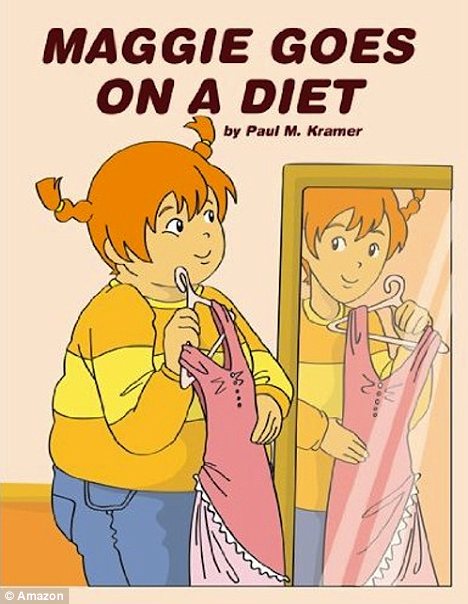
Front Cover
Premise: This book is about a 14 year old girl who goes on a diet and is transformed from being extremely overweight and insecure to a normal sized girl who becomes the school soccer star. Through time, exercise and hard work, Maggie becomes more and more confident and develops a positive self image (From Barnes & Noble).

Ages: 6-12

This book first came to my attention through Jezebel and I was immediately incensed. I am well aware that there is an 'epidemic' of obesity among children, and I think it is important to educate them on healthy eating and active lifestyles, however this? This is obscene.

Treasury Islands  says it best I think.

"Let’s take in the cover. It is, after all, the only thing we currently have to go on. This smiley girl with Pippi Longstocking plaits is probably Maggie. And Maggie is, lets face it, a little on the plump side. Maggie has a pretty pink frock. Girls like pretty pink frocks. But look! The pretty pink frock will not fit her – it is too small! Here’s a suggestion for your next book Mr. Kramer: write a book called MAGGIE’S MUM BUYS A DRESS THAT ACTUALLY FITS HER AND DOESN’T DEGRADE HER DAUGHTER, and get someone else to write it."

There are many different reasons that a child can be over weight, but a diet should never be started unless under the direction of a medical physician, and can be accomplished through a combination of nutritious meals with proper portioning which teaches children healthy eating habits, and encouragement to engage in more physical activities like sports or going for family hikes. Studies have shown that pre-pubescent girls are the most at risk group for developing eating disorders because they are being shown from a young age that their bodies are not quite right, that if they were thinner they would be prettier and therefor happy.

This book does not teach children how to live a happy and healthy life. It barely teaches children how to be happy. What it does teach, is that to be happy, you cannot be fat, overweight, a little bit plump, or anything in between. Worse, it is teaching children that they need to think about their weight! Not only is this book unnecessary, it has totally missed hitting the side of a freaking huge barn from five paces.

My hat is off to you Paul. I truly did not know that there was, in fact, a new low children's authors could sink to.

Grade: F-

It's fine to show kids how to lead a healthy lifestyle, but the concept of "going on a diet" — and all the obsessive behavior and self-loathing that can go along with it — shouldn't be part of childhood (Jezebel).

UPDATE:

For your amusement, I am adding the tags people have added to the Amazon page.

teaching kids to self-hate
give your children neuroses
sexist drivel
anorexia bait
body fascism
talentless hack writer
dangerous abusive
if you hate your daughter
sick
waste of a good tree
poor dress sense
eating disorder to order
girl-hating
horrible
why self publishing exists
child abuse
diets don t work